

Houston Free trade, globalism, tariffs, and MAGAism are happening in one country after another as countries pretend that they can be islands unto themselves. Trump and Israel’s war in Iran are all proving it’s one world, whether any of them like it or not. There are few better case stories than what’s happening in India now with protests around minimum wages. Talking to ACORN India organizers this week the protests were front and center.
There have been many reports about how the shortage of LNG gas for cooking stoves has shut down restaurants and street food vendors. The way the hand is connect to the elbow and arm, that also means that food delivery workers don’t have product to deliver, because it’s not being produced. Our union represents delivery workers so the crisis for them is immediate for us.
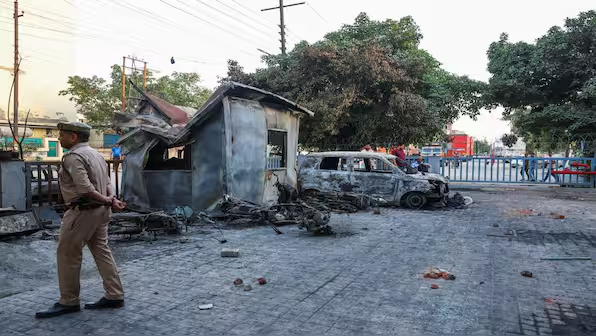
All of this led to protests, particularly around Delhi, in neighboring states of Haryana and Uttar Pradesh and in cities like Noida and Gurgaon. Industrial workers blocked roads and were joined by domestic workers. Police responded violently to suppress the protests. Ostensibly, the issue was a demand for increases in the minimum wage, because the minimums were lower than those for Delhi. This also springs from the Modi government’s consolidation and supposed reform of the labor codes, which most progressives derided, but came with a promise of minimum wages being increased. With inflation, particularly on fuel prices as well, that meant workers were falling behind. The states have responded with some raises, but the crisis continues with hundreds arrested. In one protest, more than a dozen of the women members of our affiliate, the Gig Workers Association were arrested, leaving us scrambling the next day to raise bail money for their release.
Food delivery workers are caught in a double bind, as prices skyrocketed making their costs higher and the shortage of cooking gas reducing their product. These workers, like so many informal workers in India and around the world, are daily livelihood workers. In plain English, they live on the money they make by being paid every day for the work they do that day. More devastatingly, if that wasn’t clear enough, if they can’t work, they won’t get paid, and they can’t eat. The crisis our organizers report is similar in India to the onset of the pandemic. Migrant workers are leaving our cities to go back to their families in the rural communities, where it is cheaper and easier for them to survive. Multiply what’s happening in India to the rest of the developing world where informal work dominates, and the horror expands.
In Trump’s ill-conceived war in Iran these workers are part of the collateral damage. Announcing that with the additional ceasefire in Lebanon along with the current pause in Iran that the Strait of Hormuz is open to traffic and tankers are moving now, does not suddenly solve this crisis. Oil is still not where it needs to be, meaning that there are miles to go before our workers can eat.
It’s one world, whether we pretend differently or not. Our policies and politics should reflect reality, whether we like it or not.