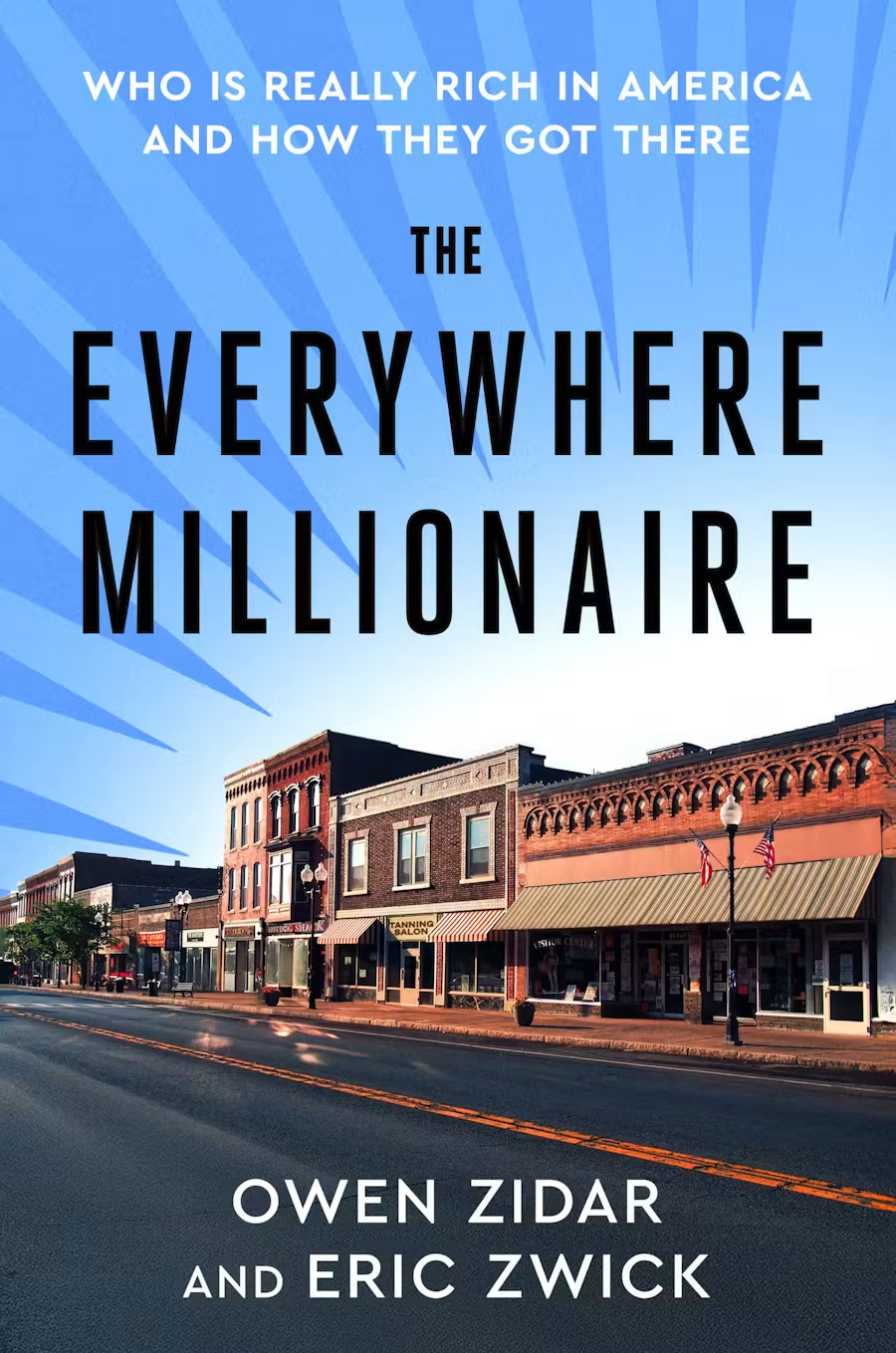


Toronto I jumped on this book as soon as I saw the first mention within minutes it was on my Kindle. I’m talking about “The Everywhere Millionaire: Who Is Really Rich in America and How They Got There” by economists Owen Zidar of Princeton University and Eric Zwick of the University of Chicago. They had buried themselves in anonymized IRS data as students and after creating one database after another from the separate silos of tax data numbers and cross-referencing them with continued massaging and research over the years, they learned something almost granular about wealth. I wanted to know more about that, and I’m glad I jumped early, because it turns out I’m seeing attention being paid to their work everywhere now.
Here are their main arguments. By hyperbole, they make the case that we may be incensed about the tech overlords and their massive wealth as indicated by the California billionaire tax and other Congressional proposals, but perhaps a greater concern should be focused at what they call “Main Street Millionaires.” These are the big money folks that aren’t on the front page and getting their pictures taken in the Oval Office. These millionaires and sometimes billionaires undergird much of the equity and wealth gap and many of them live in zip codes next door to all of us and not Park Avenue or Silicon Valley. They are car dealers, gutter manufacturers, toilet papermakers, convenience store operators, and Walmart suppliers. According to the book’s researchers, they accounted for almost $55 trillion in the most recent data from 2022, which is “13 times the collective wealth that year of the billionaires on the Forbes 400 list.”
Many of them got there by hard and ceaseless work and sometimes that put them in the right place at the right time with the right product and opportunity. The other thing that helped them were specialized tax breaks called “pass throughs.” Many of them were able to structure their businesses as limited liability or S corporations so that the income flowed directly to them on their personal taxes at a much more favorable rate than if they were paying corporate tax rates. None of that is to excuse the numerous corporate tax breaks that account for the scandal of multi-billionaire companies, including some of our tech overlords, paying next to no corporate taxes or shield their income in more favorable foreign countries.
The authors’ point here is essentially that while populist energy and reform is focused on the superrich billionaires, we are taking our eyes off the ball when it comes to tax reform that is building this even larger wealthy group of millionaires and more. The window for reform may even be harder in dealing with the wealth cohort because of their very ubiquity. Being on Main Street, small towns, and cities throughout the country, means that they also have a diffuse power base that moves from local to state to Congressional representatives where they are well-known and make their contributions.
I’m still reading, but anything that helps us get a better grip on the wealth gap and inequity in our country is worth study and reflection. More importantly, it’s a call for action, especially if the window opens for change in the US in the next session of Congress.