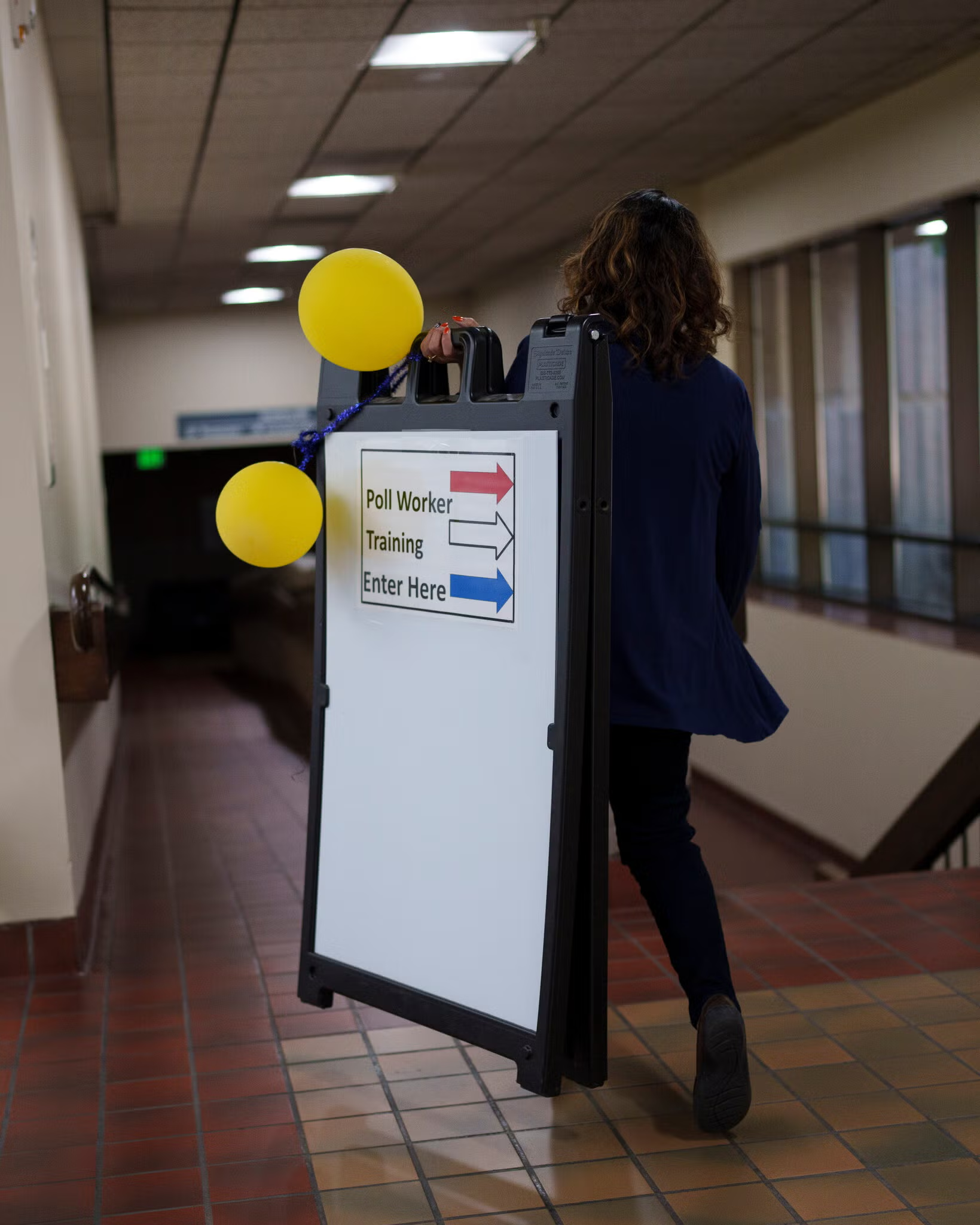


Marble Falls Your faithful correspondent has once again saddled up for a talking head session, also called by some a “webinar”. This time SciLine offered one on election protection at the polling place. Normally, this would be a snooze, but in the US, and likely too many other countries, with the midterms days away and Trump being, well, Trump, it was worth signing in and seeing what they might advise. Timely, would be an accurate word here as well, since the lead story on the Times website also featured interviews with some election experts, as well as a number of public officials from different states, whether as bluish as Virginia or as ruby red as Utah, who were united in their concern for the security of polling places and creating an environment where voters feel safe to vote.
This time the experts were three election experts and researchers from the University of North Carolina (Charlotte), Purdue University in Indiana, and the University of Kentucky. Some of their advice was simple and straightforward, while others were brass tacks practical. It all starts with a clear understanding in law and practice of the difference between partisan poll watchers, election officials, and election observers or monitors. Election officials the easiest and normally the least problematic in these categories. These often-older men and women are the ones you see inside the polling station who are tasked with making the voting process “frictionless” to quote one of the professors. They are usually experienced, know the rules, and are about protecting the voter and their right to cast their ballot. Poll watchers are partisans, usually from the Republican or Democratic party. They can watch the count, but not interfere with it. They can point out anomalies in real time, if they exist. Based on one of the professors polling and research, voters feel uncomfortable when there’s only one poll watcher from one party, but safer when there are watchers from both parties so that the whole thing is according to Hoyle. Observers or monitors have very limited roles. They can look, but can’t touch or speak. Monitors classically might be from the Justice Department or other agencies who are gathering information for later, post-election legal action. This was importantly their role during the civil rights days when many Southern states were trying to prevent African-Americans from voting.
Now, you have to be careful, they advised, because there is a whole category of observers who are now “election vigilantes”, who see their role as creating chaos at the polls. Examples would be coming into the polling area wearing masks and/or carrying firearms or trying to ask people to see their ID or give them other information. The election judges have a responsibility to keep such characters out of the polling station and away from the voting. The experts advised having the police and state officials on speed dial and visiting with them in advance, so they are prepared to act quickly to secure the station and the voters.
Almost all of the scenario planning that election officials are doing now also focused on making sure that ICE agents are nowhere near harassing voters, engaging in racial and ethnic profiling, and generally become indistinguishable from the vigilantes. The head of Homeland Security says they won’t be there, but his comments are conditional. The advice from the pros was that if anyone sees ICE or other intimidators to immediately alert the election judge for that polling place so they can take action with local police and others to secure the situation.
Of course, there are many worries in the Age of Trump about ballot seizures and federal agents entering the polling place. Federal law bars armed federal agents from polling places. Many nonprofits have been working with election officials so that they understand the law down to the level in some cases of showing them what a “real” subpoena or grand jury summons would look like.
At the same time, most experts are reassuring, despite all of the Trump administration drumbeating and bully boy tactics, that the rules are clear, the process will work, the ballots will be secure. Their consensus could be summed up as “it can’t happen here.”
It’s tragic that it’s come to this when we find that the national, popular consensus that the US is a democratic nation where the people decide turns out to be a thin shield when others might want to take action to pierce all of our 4th of July talk and beliefs.